
We sell on AppSumo. And we just used our own platform to validate the people who buy from us.
Which is either the most meta thing a founder has done on AppSumo, or the most obvious thing nobody thought to try.
Three weeks into our launch, I realized something: we'd spent months preparing our positioning, our video, our listing copy — all based on assumptions about who the AppSumo buyer is.
And we teach founders not to do that.
So, we did what we tell every founder to do: we stopped assuming and started asking.
The Experiment
We used Icanpreneur to run a full validation study on AppSumo's own buyer persona — "The Strategic Business Owner." Not as a theoretical exercise. As a real study, using real methodology, on real people who'd already bought from us.
Here's exactly what we did:
First, we built a Lean Canvas for AppSumo itself — mapping their business model, their value proposition, their customer segments, their unfair advantage. Not to critique them. To understand the ecosystem we're selling inside.
Then we ran synthetic interviews on the "lifetime deal buyer" persona. IVA generated a profile, pressure-tested our assumptions, and surfaced the questions we should have been asking from day one.
Then we did something I haven't seen any other AppSumo founder do: we invited our actual Sumo-ling buyers to participate in AI-led interviews through shareable links. Real buyers. Real conversations. Real data.
What came back changed how we think about this entire market.
What We Assumed vs. What We Found
We assumed the typical Sumo-ling was a solo founder hunting for cheap tools.
"OK Vesko! That's literally what AppSumo is known for." Fair enough. Here's my problem with that assumption.
The data told a different story. When we clustered the insights and built the buyer persona, the pattern that emerged was far more nuanced than "deal hunter."
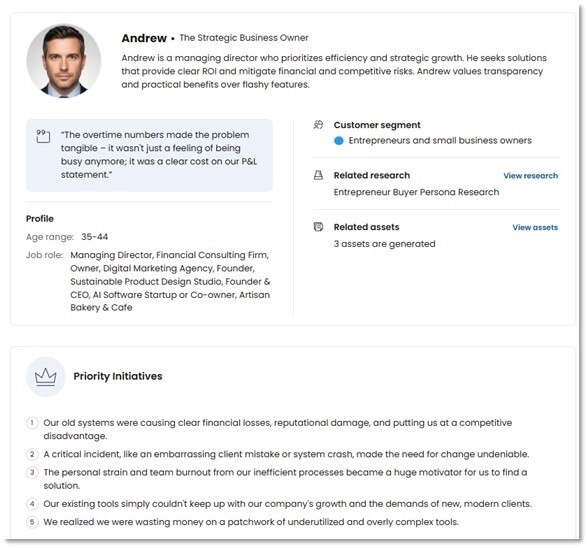
The primary persona isn't a bargain shopper. It's a managing director, agency founder, or consultant who prioritizes efficiency and strategic growth. They're not looking for the cheapest tool — they're looking for tools that provide clear ROI and reduce administrative overhead so their team can focus on client-facing work.
Their priority initiatives aren't about saving money. They're about:
- Eliminating competitive disadvantages caused by outdated systems
- Reducing team burnout from clunky workarounds
- Finding tools their team will actually adopt
Their perceived barriers? Lack of pricing transparency. Fear that the solution is too complex for their small team. Worry about choosing the wrong tool and getting locked in. These aren't price objections — they're trust objections.
And their buyer's journey? The most influential factor wasn't any feature list. It was hands-on feedback from free trials. They trust what they experience, not what they read.
None of this matched our original assumptions.
The Positioning That Emerged
Based on what customers actually told us, IVA generated a positioning and messaging framework that reframed AppSumo entirely.
The positioning statement that came out of the data: "For strategic business owners and founders who struggle with the high cost and complexity of a patchwork of software subscriptions, AppSumo is the launchpad software marketplace that delivers lifetime access to growth tools."
The ownable word: Launchpad. Not "deals." Not "discounts." Launchpad.
The competitive ladder repositioned direct SaaS subscriptions as "The Subscription Trap" — bloated, expensive, designed to lock you in. And manual/free tools as "The Hidden Cost of Free" — wastes time, creates errors, can't scale.
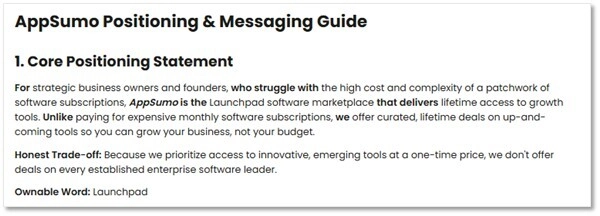
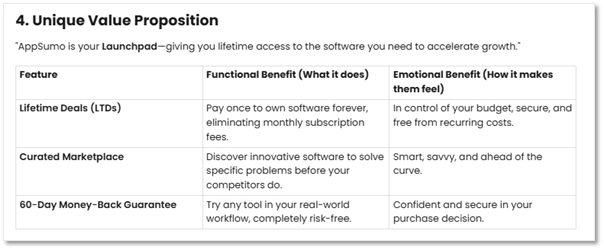
We didn't invent this framing. The data surfaced it. The buyers told us, in their own words, that they see AppSumo as an escape from the subscription model, not just a cheaper version of it.
The GTM Assets the Platform Generated
From those insights, Icanpreneur generated a complete GTM stack:
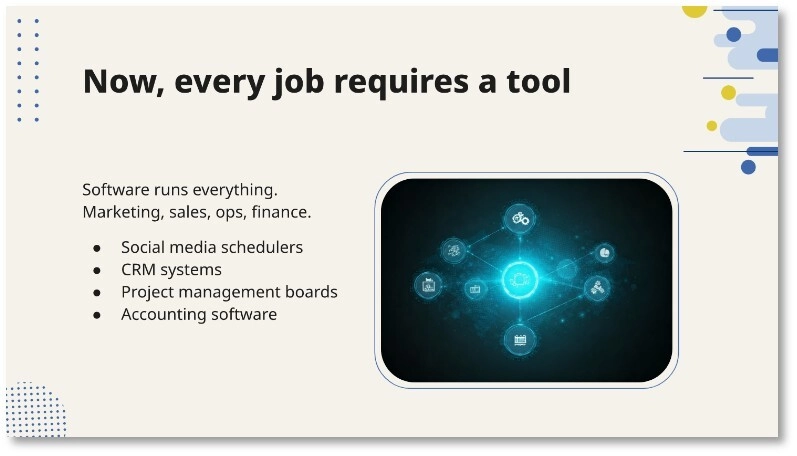
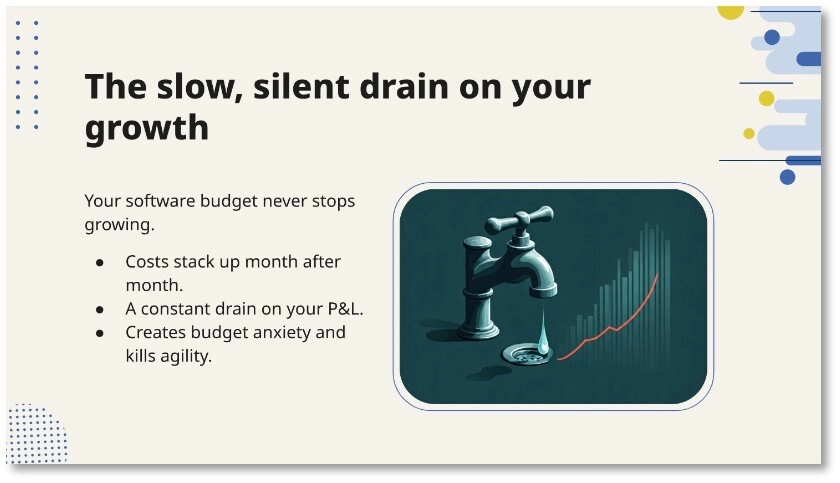
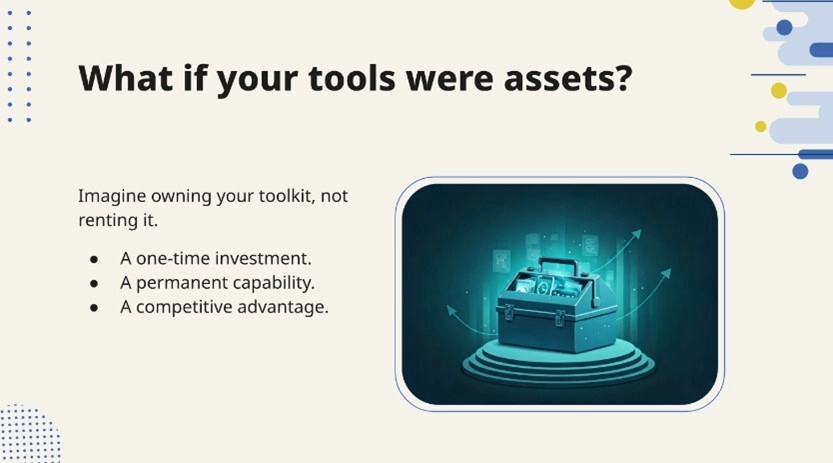
A sales pitch deck built on the validated persona — not on what we thought sounded good, but on what buyers said matters.
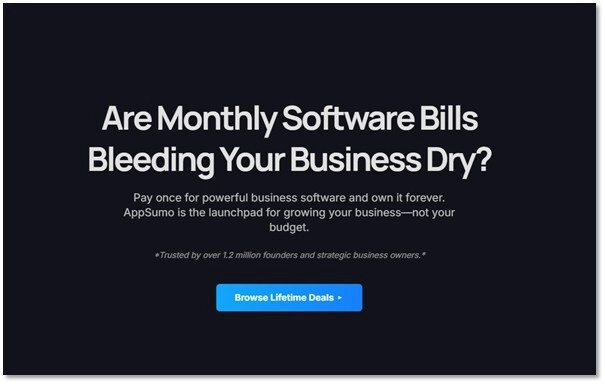
A landing page with copy grounded in the actual language buyers used — "Are Monthly Software Bills Bleeding Your Business Dry?" wasn't written by a copywriter. It was extracted from buyer interviews.
Messaging pillars that map directly to the three things buyers actually care about: stop overpaying for software, discover your unfair advantage, build your business with confidence.
Every asset came from the same source: what customers said. Not what we assumed.
Why This Matters Beyond Our Listing
Here's the thing nobody in the AppSumo ecosystem has done before: use a product on the product's own buyers, then publish the findings publicly.
Every listing on AppSumo sells to the same community. Every founder launching here is making assumptions about who Sumo-lings are and what they want. And almost nobody has validated those assumptions with structured research.
We just did. And here's what the data says:
Sumo-lings aren't deal hunters. They're strategic business owners who've figured out that the subscription model is broken for small teams. They're not buying because it's cheap — they're buying because lifetime access eliminates a recurring line item that was bleeding their P&L.
They don't churn from LTDs because the product is bad. They churn because the product didn't address their actual bottleneck — and nobody asked them what that bottleneck was before building the positioning around it.
They don't trust 5-star reviews from single-purchase accounts — but they do trust hands-on experience with a tool in their real workflow. The 60-day guarantee isn't a safety net. It's the buying mechanism.
What Genuinely Frustrates Me
Every founder launching on AppSumo writes their listing copy based on assumptions. They guess what Sumo-lings want to hear. They craft positioning in a conference room. They write messaging based on what they think sounds good.
And then they wonder why their conversion rate is 1.2%.
The irony is painful: AppSumo is a marketplace full of builders and founders — people who should know better than anyone that assumptions kill startups. And yet the default approach to selling on AppSumo is the exact same mistake these founders warn others about.
Build first. Validate later. Hope for the best.
We flipped it. We validated the buyer before we positioned the product. And the data gave us everything: the persona, the positioning, the messaging, the pitch deck, and the landing page — all from one connected workflow, all grounded in what the market actually said.
The Invitation
Every founder with an active AppSumo listing has access to the same buyers we studied. The data is sitting there — in your questions tab, in your support tickets, in your reviews, in the patterns you're probably ignoring because you're too busy optimizing your listing copy.
Stop optimizing what you're saying. Start understanding who you're talking to.
We ran this entire study — Lean Canvas, synthetic interviews, AI-led buyer interviews, persona, positioning, messaging, pitch deck, landing page — inside one platform, in one connected workflow. The same platform we're selling on AppSumo right now. Use it. Steal the methodology. Run it on your own buyers.
If your listing isn't converting the way you expected, the problem probably isn't your copy. It's that you haven't asked your buyers what they actually want and then built your entire GTM stack from the answer.
The founders who succeed on AppSumo aren't the ones with the best deal. They're the ones who understand their buyer well enough to make the deal feel like the obvious choice.
Your Sumo-lings are waiting to tell you what they actually want. You just haven't asked them yet.
Author
 Vesko Kolev
Founder & CEO of Icanpreneur. Passionate about connecting people with their purpose of becoming successful entrepreneurs.