It's never been easier to build a startup. That's exactly the problem.
You can describe an app in a sentence and watch it appear. Lovable, Cursor, Claude, Copilot — pick your weapon. What used to take a team six months and a seed round now takes one founder a weekend and a subscription. Months collapsed into days. Execution went from the hardest part of the job to table stakes.
And the whole ecosystem is celebrating the wrong thing.
Every feed is a highlight reel of speed. "Shipped my SaaS in 48 hours." "Zero to deployed before lunch." We clap for output as if output was ever the point. It wasn't. Building was never the real bottleneck. It only felt like one, because it was slow and expensive and it hid the harder problem sitting underneath it.
AI removed the hiding place. Now that anyone can build anything, the question that was always the actual job is standing in the open with nowhere left to run: what should you build in the first place?
Nobody in the graveyard died of a build problem
The startup graveyard is not full of teams that couldn't build. It's full of teams that built beautifully and built the wrong thing.
Quibi raised 1.75 billion dollars. World-class team, flawless app, premium content. It executed at a level 99% of founders will never touch. It was dead in six months. Not because they couldn't build it, but because almost nobody wanted short, premium, mobile-only video the way Quibi had decided they would.
Amazon Fire Phone. One of the best execution machines on earth shipped a phone with 3D dynamic perspective and took a 170 million dollar write-down on unsold inventory. The build was fine. The decision was wrong.
Google+. Webvan. Juicero. Different decades, same autopsy. Money, talent, engineering: all present. Customers who actually wanted the thing: absent.
None of them died of a build problem. They died of a decision problem, executed with total confidence. Now hand that same confidence a tool that ships in days instead of months. You don't get more winners. You get more people reaching the wrong destination faster.
When execution is a commodity, the decision is the moat
Here's the shift nobody wants to say out loud: when execution becomes a commodity, decision quality becomes the moat.
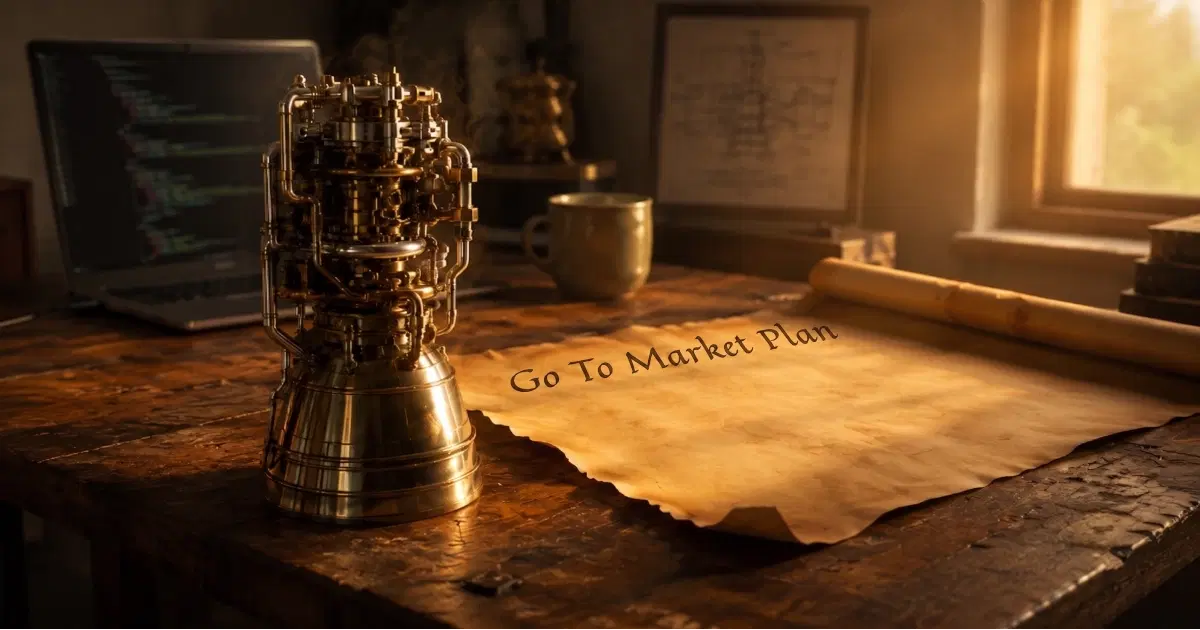
Teams now build faster than they decide. That gap — between how fast you can ship and how well you can choose what to ship — is where startups die in 2026. AI didn't close it. It blew it wide open, handing everyone a rocket engine and no map. And a rocket with no map just gets you to the wrong place at more speed.
So let me say the unpopular thing plainly. "Shipping" has quietly become the most sophisticated form of procrastination we've invented. It looks like progress. It feels like momentum. And most of the time it's a founder building on assumptions nobody stress-tested, mistaking motion for evidence.
More builders is not the answer. We have infinite builders now. What's scarce, what was always scarce, is the founder who knows what deserves to be built at all.
The wins we mythologize were decisions, not sprints
Look closely at the pivots we put on posters. Slack was the wreckage of a failed game. The team read the real signal, saw what people were actually using, and built that instead. Instagram was carved out of a bloated check-in app called Burbn once the founders watched what people actually did with it.
Neither win came from building faster. Both came from deciding better — from reading real customer evidence and turning it into the next move.
That is the entire game now. Not "can you build it." Anyone can. The question is "should you, for whom, and how do you know."
Conviction is not the enemy. Guessing is.
I'm not telling you to doubt yourself. The opposite.
Conviction is the founder's superpower. The belief that it can work, that you can pull it off, is non-negotiable. Founders need that fire. But conviction without evidence is gambling with extra steps. Conviction backed by real customer evidence is unstoppable. One is a feeling. The other is a moat.
So the answer to "when you can build anything, how do you decide what to build" is not more gut, and it's not a chatbot that flatters your idea back to you. It's a decision layer that sits between you and the build.
The most underused asset a founder has is their buyer persona. Not the fictional one-pager you wrote in week one and never opened again. The real one, built from actual customer interviews, that captures how your buyer thinks, what they are trying to get done, and what would make them move. Treated as a document, it's decoration. Treated as a decision partner, it changes how you build. You put the decision in front of it before you commit a single sprint.
- Is this the feature that earns the next dollar, or the one that's just fun to build?
- Would this positioning make them lean in or tune out?
You stop asking your gut and start asking the people who already told you the answer.
That is what closes the gap: a living buyer persona that stays grounded in real evidence and sharpens as you learn, across the whole journey from napkin to traction to winning the market. Not a static doc you fill in once. Not a task you run and forget. That principle is why we built Icanpreneur — to give founders a decision layer that keeps them one step ahead of their next call, not just faster at making it.
Because the founders who win this era won't be the ones who built the most. They'll be the ones who guessed the least.
So here's my ask
To the builders drunk on speed: slow down for the one decision that matters, and you'll out-run everyone still shipping blindly.
To the first-timers afraid they're not technical enough: that fear is obsolete. The build is handled. Your only job now is to be right about the customer.
To the serial founders who "just know": go ask the market before you spend the next six months proving yourself wrong.
The world has enough people who can build anything.
Be the founder who knows what to build.
That's the only moat left.
Author
 Vesko Kolev
Founder & CEO of Icanpreneur. Passionate about connecting people with their purpose of becoming successful entrepreneurs.